
The online education landscape is vast, with countless platforms offering a variety of learning opportunities. Among the numerous online learning providers, Udacity has positioned itself as a leader, particularly in the fields of technology, data science, artificial intelligence, and cloud computing. As an educational platform, it provides specialized courses and “Nanodegrees,” which are designed to give students hands-on experience in their chosen fields.
This article provides a detailed review of Udacity, examining its features, pricing structure, courses, and more to help you determine whether it’s the right fit for your educational goals. Whether you are considering enhancing your skills or transitioning to a new career, read on to discover if Udacity is worth your investment.
What is Udacity?
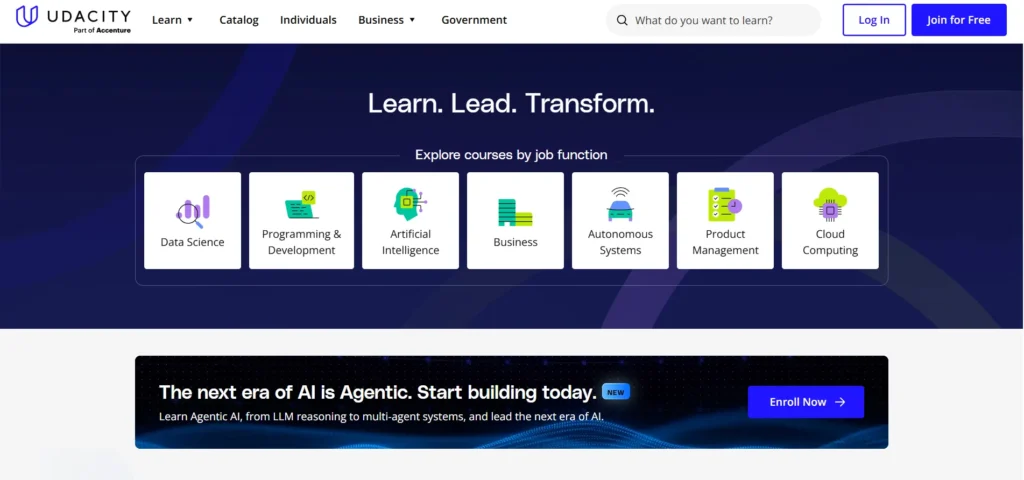
Udacity is an online learning platform founded in 2011 by Sebastian Thrun, David Stavens, and Mike Sokolsky. Originally, it offered free computer science courses, but it quickly expanded to provide paid Nanodegrees in high-demand fields like programming, data science, artificial intelligence, machine learning, and cloud computing.
What sets Udacity apart from other online learning platforms is its project-based learning approach. Instead of simply watching videos or reading text, students work on real-world projects that are reviewed by industry experts. This hands-on learning method gives students practical experience, making them more job-ready once they complete their programs.
Udacity has partnered with some of the biggest names in technology, such as Google, IBM, Facebook, and Amazon, to develop its curriculum. This ensures that the courses stay up to date with current industry standards and trends.
Key Features of Udacity
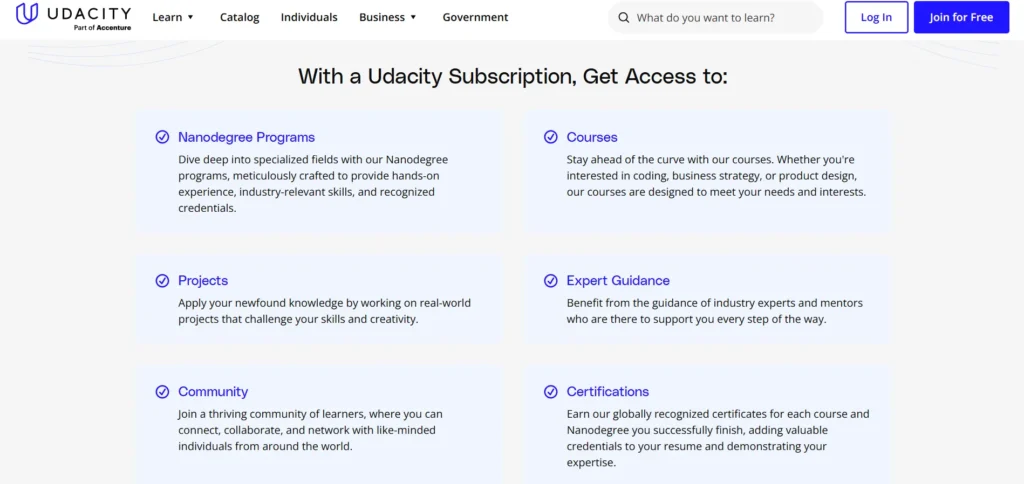
1. Nanodegrees
Udacity’s most prominent offering is its Nanodegree programs. These are specialized learning paths designed to give students in-depth knowledge in a particular field. The Nanodegrees span a range of topics, including data science, artificial intelligence, digital marketing, and programming. Each Nanodegree consists of several courses focused on both theory and hands-on projects, making students ready to apply their skills in real-world situations.
2. Project-Based Learning
One of the hallmarks of Udacity’s educational approach is project-based learning. Students don’t just take quizzes or watch instructional videos. They work on projects that simulate real-world challenges. These projects are reviewed by industry professionals who provide detailed feedback, ensuring that students get constructive criticism and suggestions for improvement.
3. Mentorship and Support
Another feature that sets Udacity apart is its mentor support. Students are assigned mentors who guide them throughout the course. These mentors are usually experts in their respective fields and can provide valuable insight into the course material and offer assistance when students encounter challenges. Having direct access to a mentor helps ensure students don’t feel lost or overwhelmed during their learning journey.
4. Career Services
Udacity offers several career services to help students land jobs after completing their programs. These services include resume reviews, LinkedIn profile optimization, and mock interviews. Udacity also provides job-search support, connecting graduates with potential employers who are looking for candidates with specific skills.
5. Flexible Learning Options
Udacity’s learning environment is self-paced, allowing students to complete courses at their own convenience. This is particularly beneficial for working professionals who want to learn new skills without committing to a rigid schedule. However, students can follow suggested timelines for each program if they want to complete their Nanodegree within a set timeframe.
6. Industry-Relevant Curriculum
Udacity works closely with top industry leaders to develop its curriculum. This ensures that the courses offered are relevant to today’s job market. For example, if you enroll in a data scientist Nanodegree, the curriculum will cover the latest tools, programming languages, and methodologies used by professionals in the field.
Udacity Courses and Nanodegrees Offered
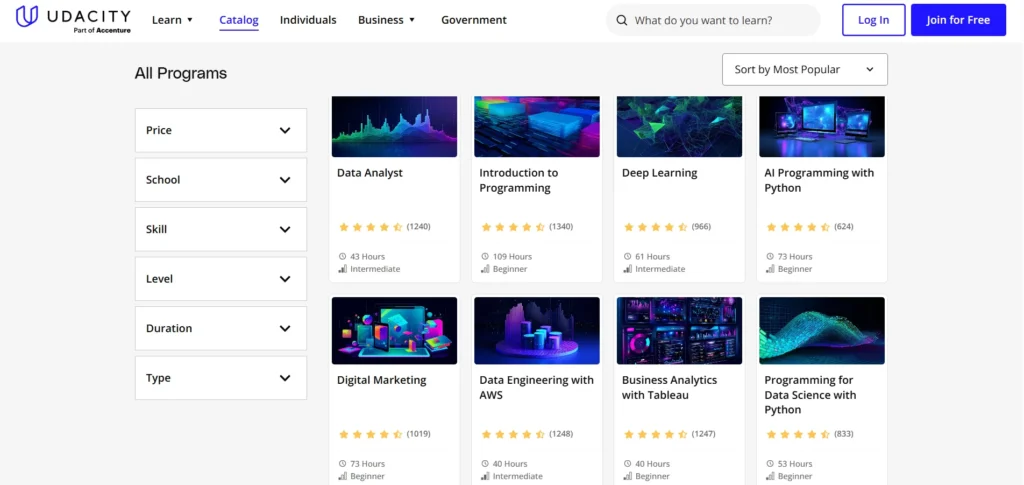
Udacity offers a wide range of courses and programs across multiple disciplines. Below is an overview of the major fields of study offered by Udacity:
1. Data Science
Udacity’s Data Science Nanodegree programs are among the most popular offerings. These programs teach students the skills required to analyze data, use machine learning algorithms, and present data-driven insights. Some of the most popular Data Science Nanodegrees include:
- Data Analyst Nanodegree
- Data Scientist Nanodegree
- AI Programming with Python Nanodegree
- Machine Learning Engineer Nanodegree
2. Artificial Intelligence (AI)
Udacity has established itself as a leader in AI education, offering several Nanodegrees in the field of Artificial Intelligence. These courses teach students about neural networks, natural language processing, deep learning, and reinforcement learning. Popular AI courses include:
- AI Programming with Python Nanodegree
- AI Engineer Nanodegree
- Deep Learning Nanodegree
3. Programming
For those who want to pursue a career in software development or web development, Udacity offers several programming-related courses. Students can learn various programming languages like Python, Java, and JavaScript. Popular programming courses include:
- Full Stack Web Developer Nanodegree
- Front-End Web Developer Nanodegree
- Java Developer Nanodegree
4. Cloud Computing
Cloud computing is one of the fastest-growing sectors in the tech industry. Udacity offers several Nanodegrees focused on cloud computing, such as:
- Cloud Developer Nanodegree
- Cloud DevOps Engineer Nanodegree
5. Digital Marketing
Udacity offers a Digital Marketing Nanodegree for individuals interested in digital advertising, SEO, content marketing, and data analytics. This course helps students develop the skills required to manage campaigns and optimize digital marketing strategies.
6. Business
Udacity offers a few courses designed to help students transition into business roles, including:
- Business Analytics Nanodegree
- Product Manager Nanodegree
Udacity Pricing Structure
While Udacity offers valuable courses, its pricing is on the higher end of the spectrum compared to other online learning platforms. Below is a breakdown of Udacity’s pricing options:
| Plan | Cost (USD) | Description |
|---|---|---|
| Monthly Subscription | $249 | Access to all courses; cancel anytime. |
| 4-Month Plan | $846 | Save 15% with a 4-month commitment. |
| One-Time Payment | $949 | Full program access; one-time fee. |
| Free Courses | Free | Limited access; no certification. |
Payment Options
- Udacity offers a monthly subscription model, which means that students pay $249 per month for access to the Nanodegree program.
- Students who prefer to commit to a longer duration can opt for the 4-month plan, which saves them 15% off the total price.
- Alternatively, a one-time payment of $949 covers the entire cost of the Nanodegree, allowing learners to pay upfront for the full program.
Note that Udacity occasionally offers discounts and scholarships for specific programs. Students can also apply for financial aid, though the availability of financial support may vary depending on the program.
Pros of Udacity
1. High-Quality, Industry-Relevant Content
Udacity partners with leading tech companies like Google, IBM, and Amazon to create courses that meet the latest industry needs. This collaboration ensures that the content is always up to date and applicable to today’s job market.
2. Project-Based Learning
Instead of just theoretical lessons, students work on practical projects, gaining hands-on experience that is crucial for career development. These projects are reviewed by industry professionals, giving students the opportunity to receive constructive feedback.
3. Career Support
Udacity’s career services include job-search assistance, resume reviews, and mock interviews. This support is valuable for students looking to enter the job market after completing their programs.
4. Flexible Learning
Udacity’s self-paced learning model allows students to complete courses on their own schedule, making it easier to balance learning with personal commitments.
5. Expert Mentorship
Mentors provide invaluable guidance and feedback throughout the course, helping students navigate difficult concepts and ensuring they stay on track with their learning goals.
Cons of Udacity
1. High Cost
Udacity’s programs are more expensive than most other online learning platforms. With prices ranging from $249 to $949, it can be a significant investment for students, especially when compared to free or cheaper alternatives like Coursera or edX.
2. Limited Course Options Outside of Tech
While Udacity excels in technology-focused courses, it offers fewer options in other areas, such as the arts, humanities, and social sciences. This makes it less suitable for students looking to study subjects outside of the tech industry.
3. No Academic Credit
Udacity’s courses don’t offer college credit, which might be a dealbreaker for some students. Unlike other platforms like Coursera or edX, which offer university-backed certifications, Udacity’s credentials are recognized mainly by employers, not academic institutions.
4. Limited Availability of Scholarships
Although Udacity occasionally offers scholarships, they are not consistently available, and the competition for these scholarships can be fierce.
Conclusion: Is Udacity Worth It?
Udacity is a leading platform for those looking to gain industry-specific skills, particularly in fields like data science, artificial intelligence, and cloud computing. The Nanodegrees offer comprehensive, project-based learning that provides students with hands-on experience, making them highly attractive to employers.
However, Udacity’s high cost and the lack of college credit for its programs might make it less appealing to some learners. If you are focused on acquiring specialized tech skills that will directly enhance your career prospects, Udacity’s Nanodegrees offer a solid return on investment.
If you are looking for affordable options or courses in non-tech fields, you might want to consider other platforms like Coursera or edX.
Ultimately, if you are committed to gaining specific technical skills and can afford the investment, Udacity is definitely worth considering.
FAQs
Are Udacity Nanodegrees worth the cost?
If you’re focused on a career in tech, the skills and hands-on experience you gain are well worth the cost, especially with the job support services.
How long do Udacity courses take?
Most Nanodegree programs take around 4 months if you commit around 10 hours per week. However, the timeline can be adjusted depending on your pace.
Can I get a job after completing a Nanodegree?
Udacity offers excellent career support, but securing a job also depends on factors like market demand and personal effort.
Are there free courses on Udacity?
Yes, Udacity offers free courses, though they don’t come with certification or mentorship.
Do Udacity programs provide college credit?
No, Udacity’s programs do not offer academic credit, but they are highly regarded by employers in the tech industry.