
In today’s tech-driven world, the competition for software engineering jobs is fiercer than ever. Preparing for technical interviews can feel overwhelming, especially with the wide range of coding challenges and problem-solving techniques that employers expect you to master. For years, LeetCode has been a cornerstone in helping aspiring developers prepare for these interviews, and it continues to be a vital tool in the toolkit of anyone pursuing a career in software development.
Founded in 2015 by Winston Tang, LeetCode started with a simple idea: to create a platform that could help software engineers prepare for coding interviews by offering a broad collection of coding challenges.
As of 2025, it has grown into one of the largest platforms of its kind, with over 26 million active users and more than 3,500 coding problems. This review explores LeetCode in-depth, looking at its features, pricing, advantages, and drawbacks, to help you decide if it’s the right resource for your coding interview preparation.
LeetCode Overview
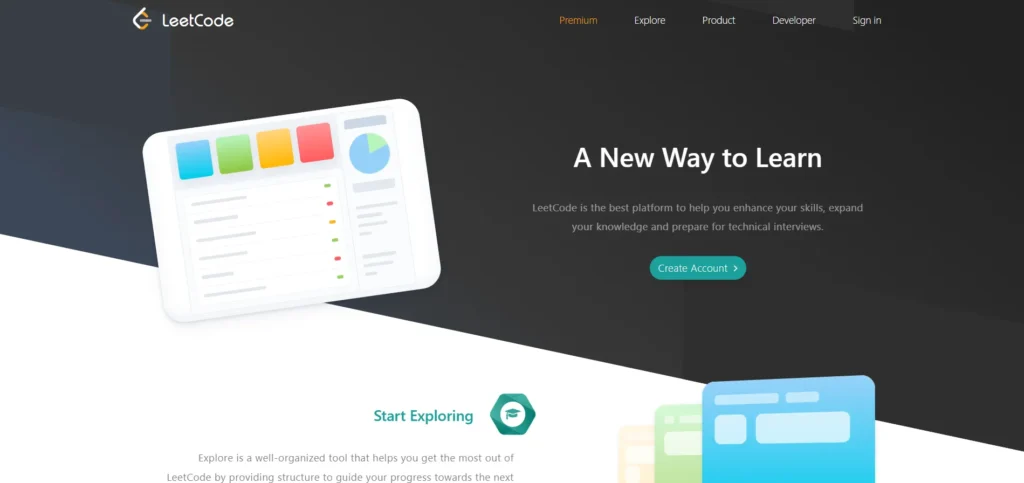
LeetCode is primarily known for its large collection of coding problems that range in difficulty from beginner to advanced. These problems cover a wide variety of topics, including data structures, algorithms, mathematics, and system design. The platform is widely used by software engineers to prepare for interviews at top companies such as Google, Amazon, and Microsoft, as well as other leading firms in the tech industry.
What sets LeetCode apart from other coding platforms is its focus on preparing users for the types of problems typically encountered in technical interviews. Its problems are designed to test not only a developer’s coding skills but also their ability to think critically and solve complex problems under pressure. With features such as company-specific question sets and mock interview tools, LeetCode has become the go-to destination for anyone looking to ace their coding interviews.
Key Features of LeetCode
LeetCode’s features have been specifically designed to offer a comprehensive platform for coding interview preparation. Here are some of the platform’s standout features:
1. Extensive Problem Library
LeetCode offers a massive collection of coding problems. The platform categorizes its problems by difficulty—easy, medium, and hard—allowing users to choose problems that match their skill level. As of 2025, LeetCode has more than 3,500 problems across various categories. These problems cover a wide range of topics such as:
- Arrays
- Strings
- Trees
- Graphs
- Dynamic Programming
- Backtracking
- Greedy Algorithms
- Mathematical Algorithms
- Database-related Problems
- System Design
This diverse selection of problems helps developers prepare for various scenarios that could come up in interviews at major tech companies.
2. Company-Specific Question Sets
One of LeetCode’s most valuable features is its ability to offer company-specific question sets. These curated sets include coding challenges that have previously been asked in interviews at some of the world’s largest tech companies, such as Google, Amazon, Facebook, and Microsoft. Premium users can access these question sets, allowing them to focus on the problems that are most relevant to their interview preparation.
The company-specific question sets are particularly useful for individuals targeting a specific company. By practicing problems that are frequently asked by the target company, users can increase their chances of passing technical interviews and landing job offers.
3. Mock Interviews and Timed Assessments
Another key feature of LeetCode is its mock interview and timed assessment tools. These features simulate real-world interview conditions by providing users with a set of questions to complete within a limited time frame. Mock interviews allow users to practice solving coding problems while adhering to a strict timeline, just as they would in an actual interview scenario.
These mock interviews can help users improve their speed and efficiency, which are essential skills when faced with time constraints during real interviews. By taking timed assessments, users can learn how to prioritize tasks and manage their time effectively, two key factors that contribute to interview success.
4. Detailed Solutions and Explanations
LeetCode provides detailed solutions and explanations for all its problems. After solving a problem, users can view solutions from other users or the platform itself. This allows developers to compare their approach with others and learn new techniques and strategies for solving problems more efficiently.
In addition to solutions, LeetCode also offers explanations that break down the steps required to solve each problem, making it easier for users to understand the underlying concepts and logic. This feature is particularly helpful for users who may struggle with certain problems and need additional guidance to grasp the solution.
5. Community Engagement and Discussion Forums
LeetCode has a vibrant and active community of users who regularly participate in discussions and share solutions to problems. The platform’s discussion forums allow users to ask questions, share tips, and discuss coding strategies. Engaging with the community can be an excellent way to deepen your understanding of various algorithms and problem-solving techniques.
Additionally, users can post their own solutions and get feedback from other community members, which fosters a collaborative learning environment. The community aspect of LeetCode adds an extra layer of support for users who may need help or motivation as they work through coding problems.
6. Explore Feature
LeetCode’s “Explore” feature offers structured learning paths designed to help users master specific topics in computer science, such as data structures and algorithms. These paths guide users through a series of problems that progressively increase in difficulty, providing a more organized and systematic approach to learning.
The Explore feature is particularly useful for beginners who may not know where to start. It offers a curated learning experience that ensures users build a solid foundation in core topics before moving on to more advanced problems.
Courses and Learning Paths Offered
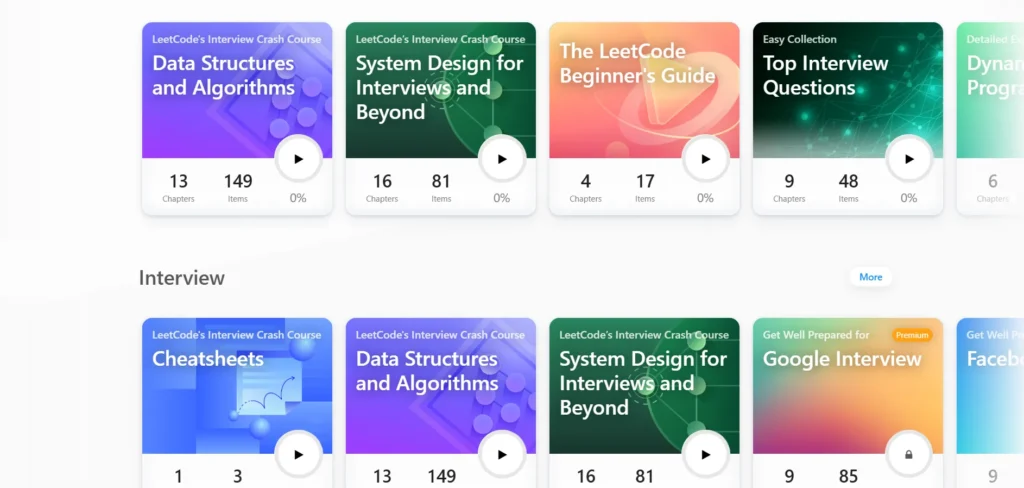
Although LeetCode’s primary focus is on coding problems, it also offers a few courses that provide in-depth knowledge on specific topics, particularly in the realms of data structures, algorithms, and system design. Some of the main courses include:
Data Structures & Algorithms: This course covers the fundamental building blocks of computer science and teaches you how to approach coding problems efficiently. It covers everything from basic arrays to advanced dynamic programming problems.
System Design: This course helps users understand the complex systems that tech companies build, such as scalable and distributed systems. It teaches users how to break down large, complex problems into manageable pieces and design solutions that can handle massive amounts of data and traffic.
Database Design: LeetCode offers a course on database-related problems, which covers SQL queries and database design concepts. This is an essential course for those preparing for database-related interview questions.
Concurrency: LeetCode also provides learning material on concurrency, which is a vital topic for those preparing for interviews at companies with large-scale applications and systems.
Pricing
LeetCode offers both free and paid subscription options. Here’s an overview of their pricing structure:
Free Plan:
- Access to a limited number of problems (mostly the easier ones).
- Access to community discussions and solutions.
- No access to company-specific question sets.
- No access to mock interviews or timed assessments.
Premium Plan:
- Monthly subscription: $35/month.
- Annual subscription: $159/year (equivalent to $13.25/month).
- Access to all coding problems (including premium problems).
- Access to company-specific question sets and mock interviews.
- Detailed solutions and explanations for all problems.
LeetCode also offers discounts for students. If you’re a student, you may be eligible for a reduced rate of $99/year for the premium plan when you sign up as part of a student group.
Pros and Cons of LeetCode
Pros
Large Collection of Problems: With over 3,500 coding challenges available, LeetCode offers one of the most extensive problem libraries of any coding platform. This is a major benefit for anyone looking to improve their coding skills or prepare for coding interviews.
Company-Specific Focus: The ability to access company-specific question sets is one of the most valuable features of LeetCode Premium. It helps users focus their preparation on the companies they are targeting, increasing the chances of interview success.
Mock Interviews: LeetCode’s timed assessments and mock interviews are excellent tools for simulating real interview conditions. They help users build confidence and learn how to handle pressure during coding interviews.
Community Engagement: The LeetCode community is active and supportive. The forums provide a place for users to ask questions, share tips, and get feedback on their solutions. This creates a collaborative learning environment that benefits everyone.
Structured Learning Paths: The “Explore” feature offers a structured approach to learning, guiding users through complex topics like algorithms and system design in a systematic way. This is helpful for beginners who may not know where to start.
Cons
Premium Costs: While LeetCode’s free plan offers a good amount of value, the premium subscription can be quite expensive, especially for users who are just getting started. Some might find the $35/month fee to be prohibitive, especially if they are unsure whether they will use all the features available.
Overwhelming for Beginners: LeetCode’s sheer volume of problems and advanced concepts can be overwhelming for beginners. Users who are new to coding or interview preparation might find the platform’s challenges too complex at first.
Quality of Solutions: While LeetCode provides detailed solutions, some of the user-submitted solutions may be suboptimal or unclear. This can lead to confusion, especially for those who are trying to understand the most efficient way to solve a problem.
Limited Free Content: The free version of LeetCode offers access to only a small fraction of the available problems, limiting its utility for more advanced users who are looking for more challenging content.
Conclusion
LeetCode is one of the best platforms available for preparing for technical interviews, offering a wide range of coding problems, structured learning paths, company-specific question sets, and mock interview tools. Its community-driven approach and extensive resources make it an invaluable tool for anyone serious about passing coding interviews and landing a job at a top tech company.
However, LeetCode may not be for everyone. The platform’s premium subscription can be expensive, and its vast problem library can be overwhelming for beginners. That being said, if you are committed to mastering coding interviews, LeetCode offers everything you need to succeed.
Whether you’re a beginner or an experienced developer, LeetCode has something to offer. If you’re ready to put in the time and effort, it’s a worthwhile investment for anyone looking to advance their career in tech.
FAQs
What is LeetCode?
LeetCode is an online platform offering coding problems to help developers prepare for technical interviews.
Is LeetCode free to use?
Yes, LeetCode offers a free plan with access to basic coding problems and community solutions.
What is the difference between LeetCode’s free and premium plans?
The premium plan provides access to exclusive problems, company-specific question sets, and mock interview tools.
How many problems are available on LeetCode?
LeetCode offers over 3,500 coding problems covering a wide range of topics and difficulties.
Can LeetCode help with system design interviews?
Yes, LeetCode offers a system design course and relevant problems to help users prepare for system design interviews.